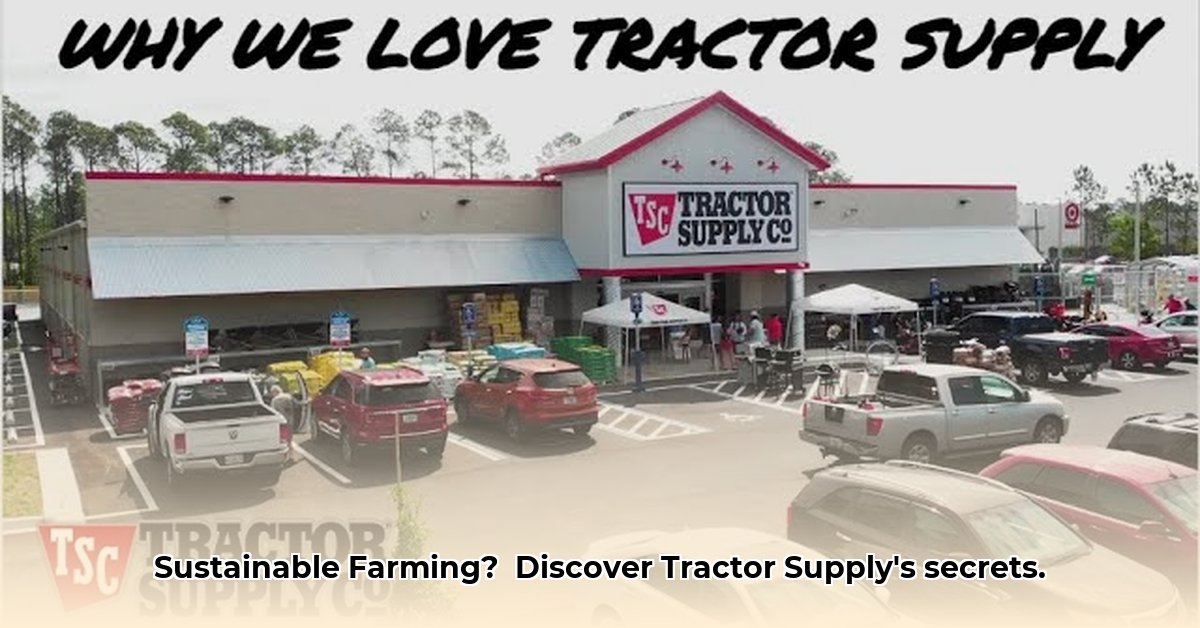
Tractor Supply (TSC) in Bushnell, Florida, serves as a vital resource for local farmers and gardeners. However, its role in promoting sustainable agriculture requires further examination. This article explores TSC's current offerings, identifies gaps in its sustainability initiatives, and provides actionable steps for the store, farmers, and consumers to collectively foster a greener future for the Bushnell farming community. For pasture-raised animals, consider building a chicken tractor.
TSC's Current Offerings for Sustainable Agriculture
The Bushnell TSC store offers a range of products relevant to sustainable farming practices. These include various livestock feeds, fencing materials for pasture-raised animals, a selection of seeds, and water-efficient tools. While some organic options are available, their extent is limited compared to the overall inventory. This raises the question: How can we ensure that TSC's offerings truly reflect the growing demand for sustainable solutions?
Challenges and Gaps: Opportunities for Improvement
Despite offering useful products, TSC’s commitment to sustainable agriculture lacks sufficient transparency. Critical information regarding the supply chain's environmental impact, fertilizer sourcing, packaging materials, and waste reduction strategies remains unavailable. This lack of transparency limits consumer confidence and hinders TSC's potential as a key player in sustainable farming. The absence of clearly defined sustainability initiatives represents a significant opportunity for improvement. What steps can TSC take to address these issues and build a stronger reputation for environmental responsibility?
Actionable Steps Towards a Greener Future
A collaborative effort is necessary to advance sustainable agriculture in Bushnell. The following steps provide a practical roadmap for TSC, local farmers, and consumers:
Actionable Steps for Tractor Supply Bushnell:
Expand Local & Organic Partnerships: Actively seek partnerships with local organic farms to increase the availability of sustainably-produced products. This simultaneously supports local businesses and provides consumers with more eco-friendly choices.
Invest in Employee Training: Implement comprehensive training programs for employees on sustainable farming practices. Empowered employees can effectively advise customers, transforming TSC staff into valuable community resources.
Enhance Product Transparency: Clearly label products with detailed information about their sustainability aspects. This includes sourcing information, packaging details, and relevant certifications (e.g., USDA Organic).
Publish a Sustainability Report: Annually publish a detailed report outlining the store's environmental footprint, showcasing commitment and identifying areas for improvement. This builds consumer trust and demonstrates accountability.
Actionable Steps for Local Farmers and Gardeners:
Utilize Available Resources: Maximize the use of TSC's sustainable offerings to incentivize the store to expand its eco-friendly inventory.
Communicate Demand: Directly communicate the need for more organic and locally sourced products to TSC management. Increased consumer demand will drive inventory adjustments.
Collaborate with TSC: Engage with TSC in collaborative sustainability initiatives, creating mutually beneficial partnerships and programs.
Actionable Steps for Consumers:
Prioritize Sustainable Choices: Make conscious purchasing decisions, prioritizing sustainable products whenever possible. This sends a strong market signal to retailers.
Provide Constructive Feedback: Communicate preferences and suggestions to TSC, providing valuable input for improving their sustainability initiatives.
Support Eco-Conscious Businesses: Actively support businesses demonstrably committed to sustainable practices.
Building a Sustainable Future Together
TSC Bushnell holds immense potential to become a regional leader in sustainable agriculture. However, realizing this potential requires a concerted effort from all stakeholders. Through collaboration and proactive steps, the Bushnell community can collectively build a more sustainable and prosperous agricultural future. Further research into sustainable farming techniques and consumer preferences will be crucial for refining and enhancing future initiatives.
How to Identify Sustainable Farming Supplies at Tractor Supply
Key Takeaways:
- TSC offers various products relevant to sustainable agriculture; however, discerning truly sustainable options requires careful scrutiny.
- Consumers and farmers can actively influence TSC's sustainability efforts through informed purchasing choices and direct communication.
- TSC's potential contribution to sustainable agriculture hinges on strategic changes and increased consumer demand for eco-friendly products.
Navigating Sustainable Choices
To source sustainable options at TSC, follow these steps:
Examine Product Labels: Carefully scrutinize product labels for certifications like USDA Organic and detailed ingredient information.
Engage with TSC Staff: Ask employees about the sustainability aspects of specific products.
Conduct Online Research: Research product brands and sustainability claims online, consulting independent reviews and reliable sources.
Prioritize Durability: Opt for durable tools and equipment to reduce waste and extend product lifespan.
Consider Packaging: Choose products with minimal or recycled packaging whenever feasible.
Community-Driven Change
TSC can enhance its sustainability profile by partnering with local organic farms and offering workshops on sustainable farming practices (e.g., composting, water conservation, integrated pest management).
Your Role in Creating Change
Consumers play a critical role. Demanding sustainable options at TSC drives change within the retail sector. Your purchasing decisions directly influence TSC's inventory and future sustainability initiatives.